Pricing is the first thing most homeowners want and the last thing most pest control websites will put in writing. This guide puts our numbers on the page, next to what we typically see other companies across Hampton Roads charge, so you can read any quote you are handed — including ours — and know what you are looking at.
How much does pest control cost in Hampton Roads?
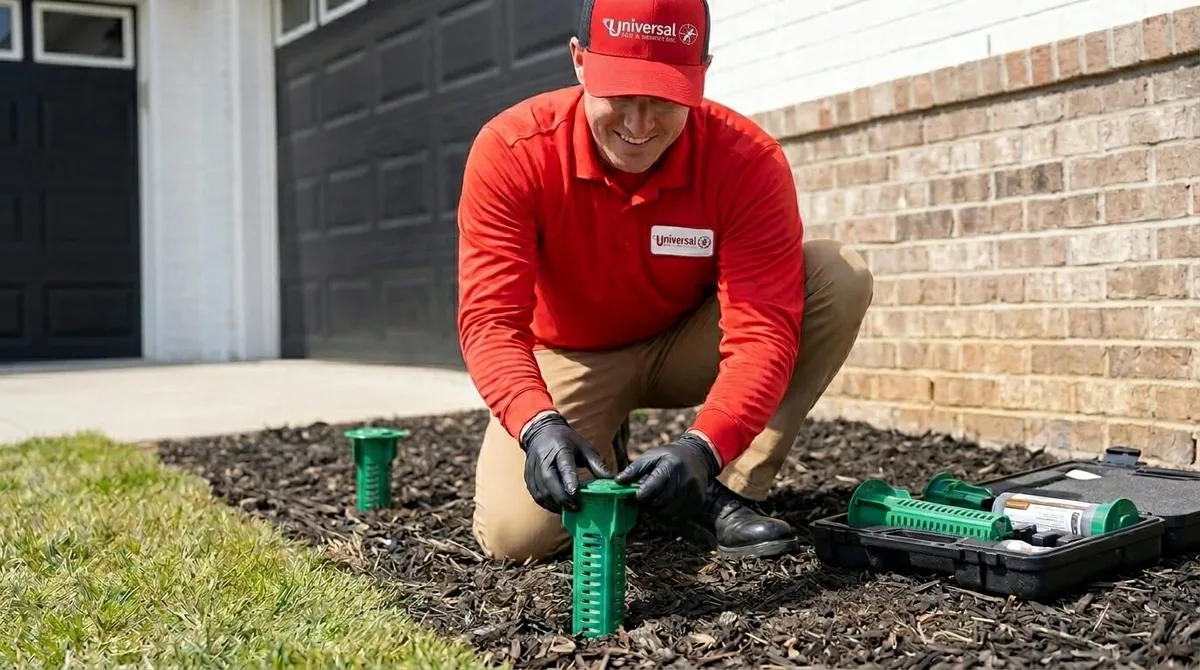
Recurring quarterly pest control in Hampton Roads generally runs between $40 and $70 per month, with our own plans starting at $34 per month. One-off treatments, termite work, and rodent exclusion are priced per property, because they are driven by the size and construction of the house rather than by a flat rate. Figures given for the wider market are our own observations of local quotes, not a published survey.
| Service | Typical Hampton Roads range | Universal Pest & Termite |
|---|---|---|
| Quarterly pest control | $40 – $70 / month | Starting at $34 / month |
| UniGuard termite & pest membership | — | From $59 / month |
| Liquid termite barrier | $800 – $2,800 | Upfront or annual bond options |
| Rodent exclusion (whole home) | $500 – $3,600 | $99 – $1,495 |
| Crawl space encapsulation | — | $3,000 – $10,000 |
| Duct cleaning (single zone) | — | From $314 |
| WDIR termite letter for a closing | — | $75 – $125 |
Market ranges reflect what we typically see other Hampton Roads companies charge, based on quotes homeowners bring us. They are our own observations, not a published survey. Our figures are starting points; the number for your house comes from an inspection of that house.
What does a quarterly pest control plan actually include?
A quarterly plan covers four scheduled treatments a year plus return visits between them at no extra charge if a covered pest comes back. Ours starts at $34 per month and is backed by our Pest-Free Guarantee.
The monthly figure is the part homeowners compare, but it is the return-visit policy that determines what the plan is worth. A cheaper plan that charges for callbacks costs more the first time ants reappear in July. When you compare two quarterly quotes, the questions that matter are which pests are covered, whether re-treatments are included, and whether the price is locked for the term.
| Plan | From | Best suited to |
|---|---|---|
| Quarterly pest protection | $34 / month | Ants, roaches, spiders, and the seasonal pests most Hampton Roads homes see |
| UniGuard membership | $59 / month | Homeowners who want termite coverage bundled with quarterly pest service |
The Home Health Plans page sets out what each tier includes in full.
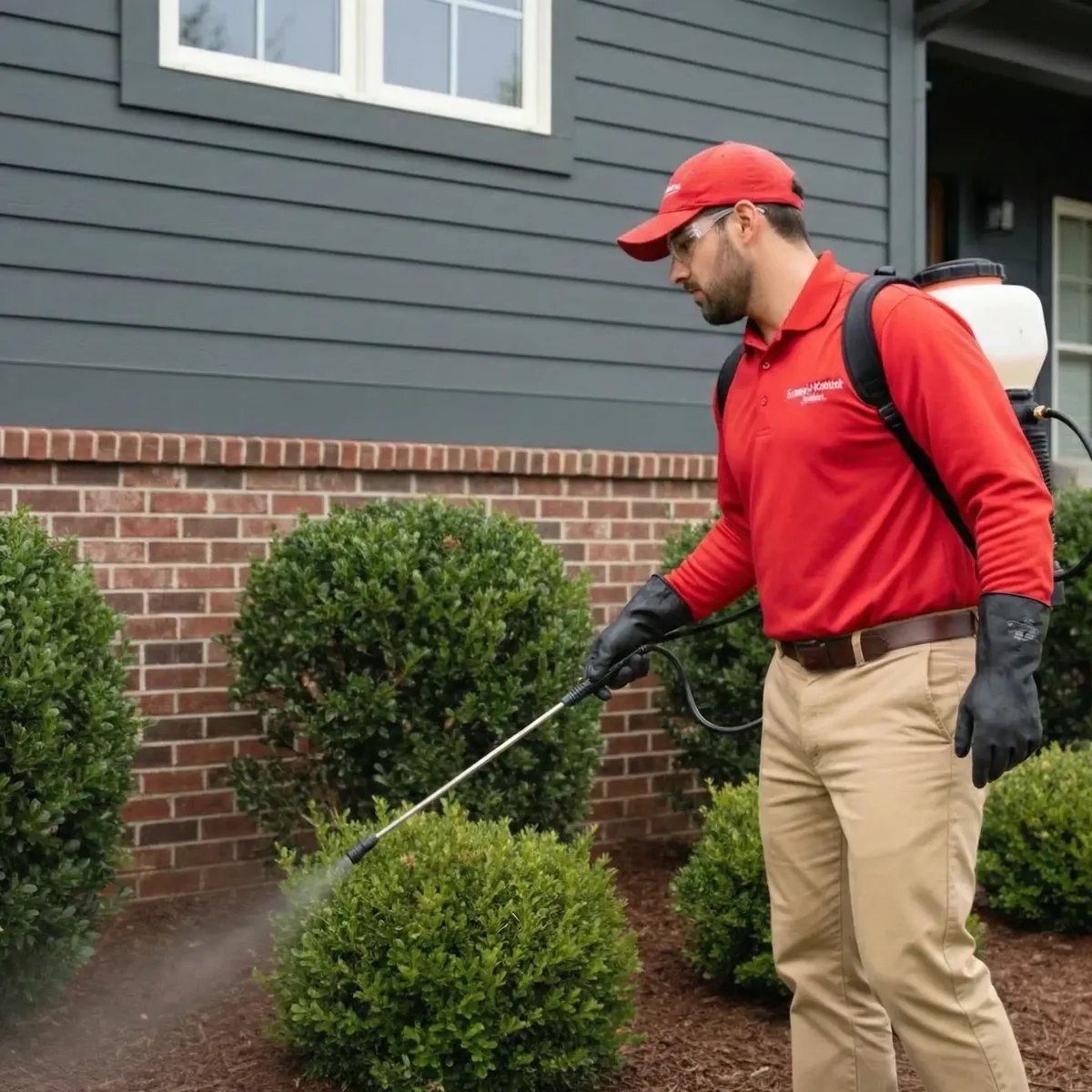
How much does termite treatment cost?
A liquid termite barrier in this region commonly falls between $800 and $2,800 — our own observation of local quotes, not a published survey. Where a particular house lands depends mostly on the linear footage of foundation to be treated and how much attached concrete has to be drilled through.
We price termite work either as an upfront treatment or through an annual bond, which spreads the cost and keeps the property under continuous coverage and re-inspection. Neither structure is automatically cheaper — the upfront option costs less over a short horizon, the bond costs less in aggregate if you intend to stay in the home and want the warranty maintained.
The variables behind that range are worth understanding before you compare quotes. We break down each one in what determines the cost of termite treatment, and the two delivery methods are compared on the liquid termite treatment and termite baiting system pages.
What does rodent exclusion cost?
Whole-home rodent exclusion runs $99 to $1,495 with us, against a typical regional range of $500 to $3,600 — our own observation of local quotes, not a published survey. The spread is wide because exclusion is priced by the number and difficulty of the entry points that have to be sealed, not by the number of mice caught.
That distinction is the single biggest source of confusion in rodent pricing. Trapping removes the animals currently inside. Exclusion closes the gaps they used, which is what stops the next ones. A quote covering only trapping will always look cheaper and will usually need repeating. There is a fuller breakdown in rodent exclusion pricing.
What do crawl space, duct, and insulation projects cost?
Crawl space encapsulation projects generally run $3,000 to $10,000 depending on square footage, drainage requirements, and the condition of what is already down there. Duct cleaning starts at $314 for a single zone.
These are the jobs where scope drives the number more than anything else. A dry, empty, high-clearance crawl space with intact framing sits at the bottom of that range. One that needs debris removal, a sump and drainage, insulation replacement, and a dehumidifier sits at the top. Two contractors quoting the same house very differently are usually quoting different scopes — compare the line items, not the totals.
National average figures published by home-services directories tend to run higher than the range above. Those averages pool markets with very different labour rates and crawl space construction; the figures here are what these projects cost in Hampton Roads.
| Project | Range | What moves it |
|---|---|---|
| Crawl space encapsulation | $3,000 – $10,000 | Square footage, drainage, debris removal, dehumidification, existing damage |
| Duct cleaning | From $314 (single zone) | Number of HVAC zones, system accessibility, contamination level |
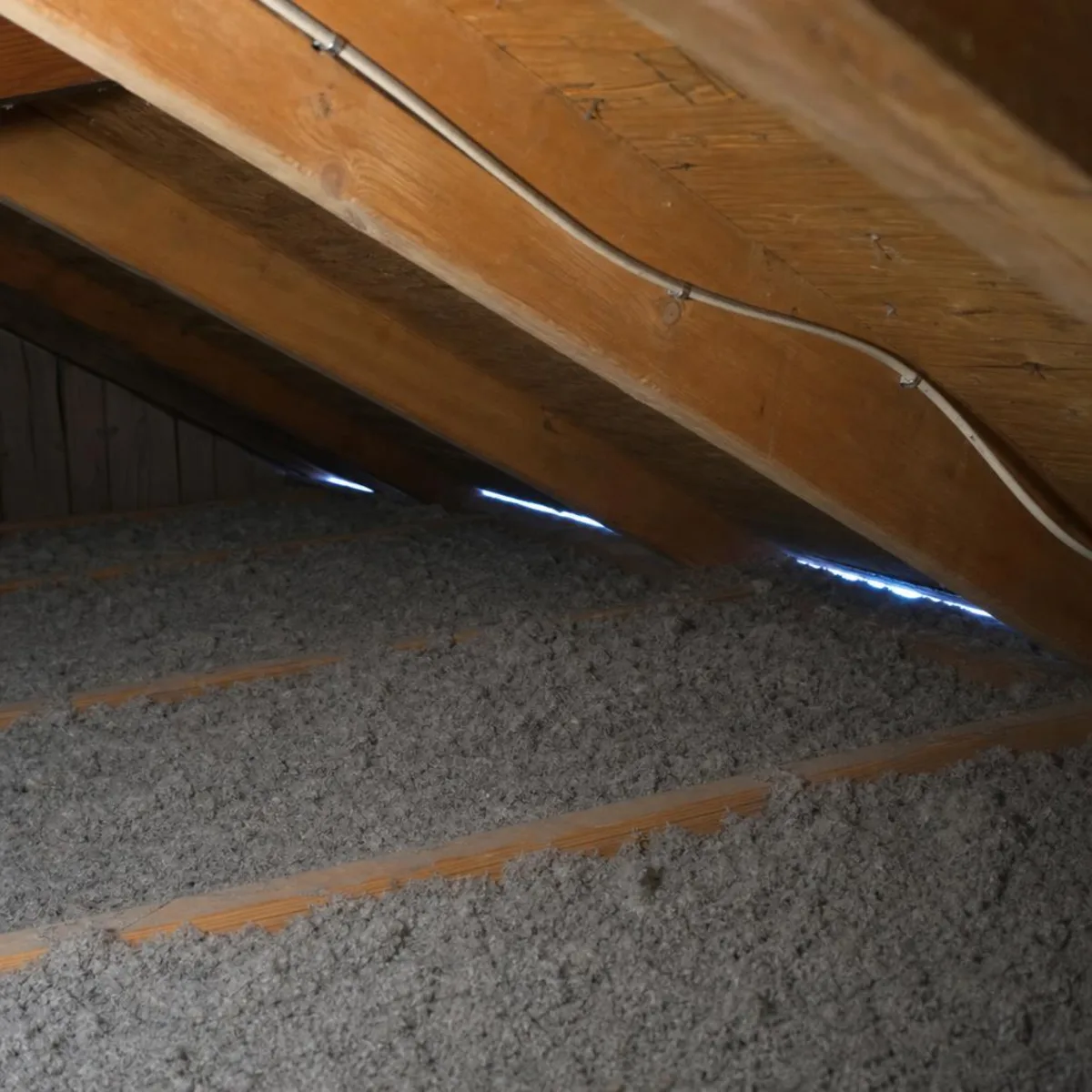
| Attic insulation | Quoted per home | Removal and sanitation of contaminated material, target R-value, attic access |
Whether encapsulation is the right call for your house at all is a separate question from what it costs — vented vs. encapsulated crawl space covers the cases where it is not worth doing. Duct and insulation work is handled by Universal Duct Cleaning and Universal Insulation Doctor.
How much is a termite letter for a real estate closing?
A WDIR — the wood-destroying insect report a lender or closing attorney requires — costs $75 to $125. That is separate from a standard homeowner termite inspection, which is free.
Book a real estate termite inspection
The two get confused constantly. A free inspection is us looking at your house so we can tell you what is happening and quote any work. A WDIR is a formal, signed document prepared to a state-regulated format for a transaction, and the fee covers the report and the liability attached to it. See real estate termite inspection for turnaround and what the report covers.
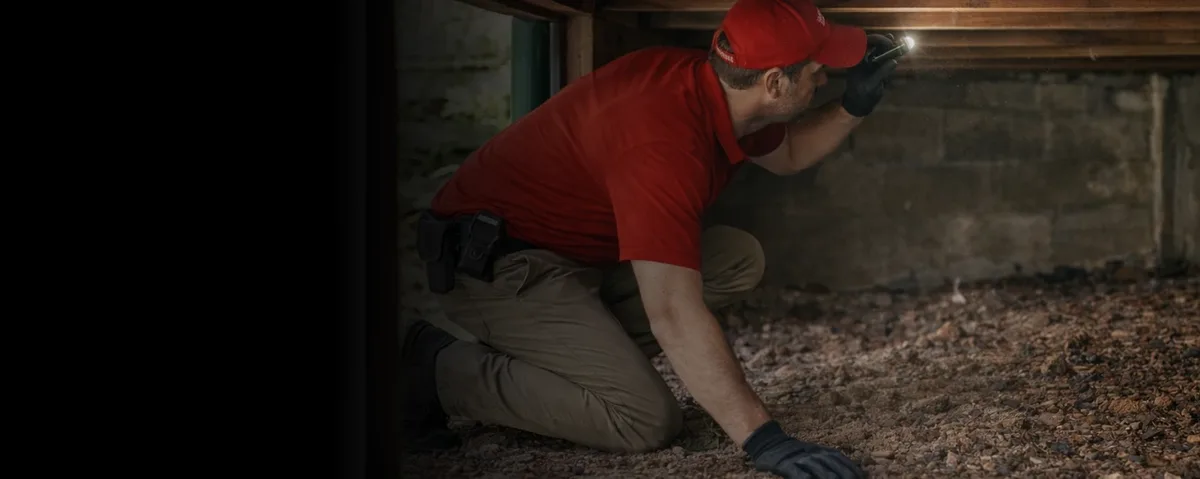
Is doing it yourself cheaper?
For minor, isolated problems, yes. A homeowner will typically spend around $150 on store-bought products over a season — our own observation of what customers report, not a published survey — which is real money against a $34 monthly plan, and it is wasted if the target is German cockroaches, subterranean termites, or an established rodent population.
The failure mode is specific rather than general. Retail aerosols kill what they contact, which works on a visible trail of pavement ants. It does not work on a species that nests out of reach and breeds faster than contact killing removes it. With German roaches, repellent sprays actively worsen the problem by scattering harborages. With termites, the delay while a homeowner experiments is itself the cost, because the colony continues consuming structural wood the entire time.
Can these costs be financed?
Yes. SmartPay offers $0 down and 0% APR options on larger remediation projects, which is most relevant to encapsulation, exclusion, and termite damage repair rather than to monthly plans.
Financing does not change the price of the work; it changes whether the work can happen now instead of after the damage gets worse. For structural problems that compound — active termites, a wet crawl space, an open rodent entry point — the arithmetic usually favours acting.
Frequently asked questions
Why do two companies quote such different prices for the same house?
Almost always because they are quoting different scopes, different warranty terms, or different re-treatment policies. A termite quote covering the perimeter only is not comparable to one that includes drilling attached concrete, and a pest plan that bills for callbacks is not comparable to one that does not. Compare inclusions before totals.
Is the cheapest quote usually the most expensive one?
Not always, but it is worth checking what has been left out. The common omissions are attached concrete on termite work, entry-point sealing on rodent work, and re-treatment visits on quarterly plans. Each one shows up later as a separate invoice.
Do you price-match other termite companies?
We carry a termite price beat guarantee, so bring us a written quote from a licensed competitor for comparable work and we will look at it. Comparable is the operative word — the scope and warranty have to match for a comparison to mean anything.
Does a bigger house always cost more to treat?
For termite work, cost follows the perimeter rather than the square footage, so a sprawling single-storey can cost more to treat than a compact two-storey with more living space. For pest plans, size matters less than construction type and how many exterior access points the building has.
Are these prices locked in?
The plan pricing is what we publish today and it is what a new plan starts at. Project ranges are exactly that — a range that an inspection resolves into a fixed, written figure before any work begins.
What does pest control cost in my specific city?
The figures on this page are current for every city we serve. Where costs differ between municipalities it is housing stock rather than geography doing the work — more crawl space foundations in one area, more slab construction in another — and that shows up in termite and crawl space pricing rather than in plan pricing. Older city-specific guides on this blog may quote earlier figures; this page is the current reference.
How do I get an exact number?
Book a free inspection. Universal Pest & Termite covers Virginia Beach, Chesapeake, Norfolk, Suffolk, Portsmouth, Hampton, Newport News, Williamsburg, Poquoson, and York County. Call (757) 502-0200.