A musty smell almost never starts in the room where you notice it. In Hampton Roads it usually starts under the floor — and by the time it reaches a hallway closet or a first-floor vent, the air carrying it has already traveled up through your subfloor.
Why does my crawl space smell musty in Hampton Roads?
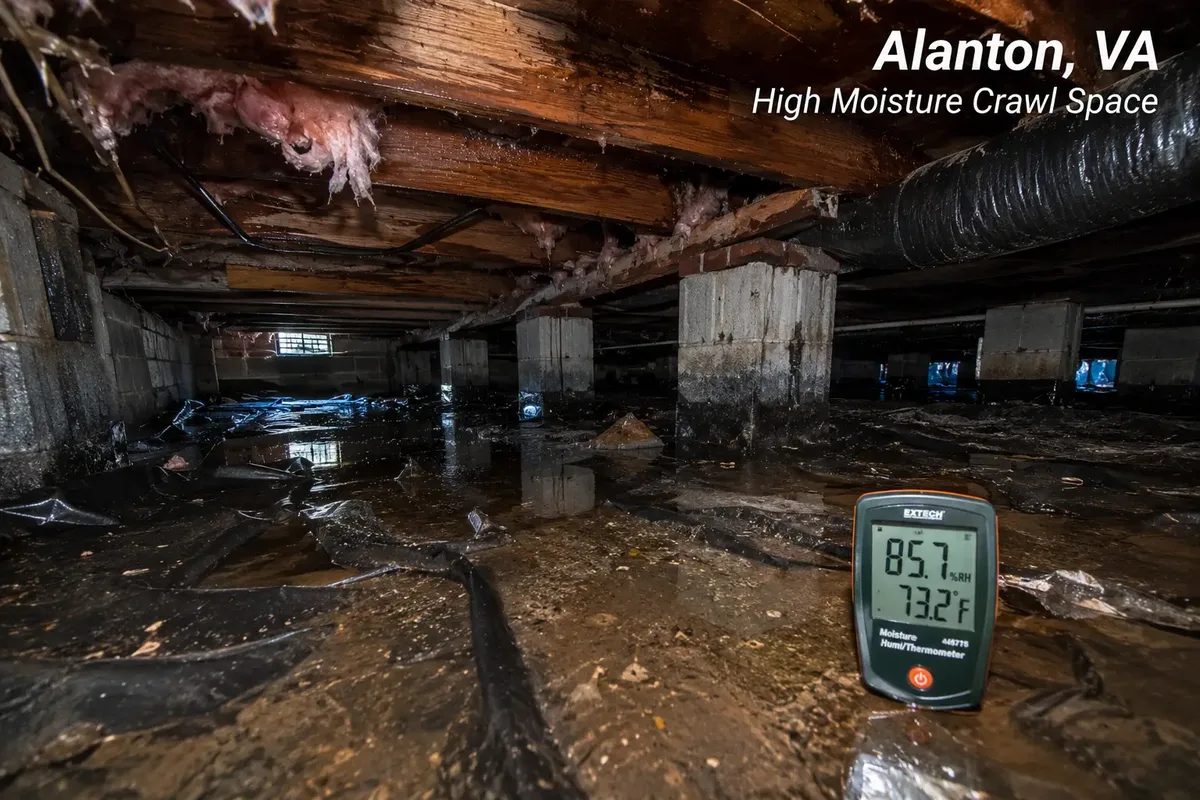
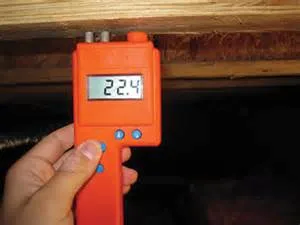
A musty crawl space smell is the odor of wood-decay fungi and damp organic material growing on subfloor framing, insulation, and stored items. It develops when crawl space wood stays above roughly 20% moisture content — routine in coastal Virginia, where a high water table meets humid marine air.
Wood-decay fungi need three things: wood, oxygen, and water. The first two are permanent features of a crawl space, so moisture is the only variable you can actually control. Below about 20% moisture content in the wood, decay organisms stay dormant. Above it, they become active, and their metabolic byproducts are what you smell.
How does a smell under the floor get into my living room?
Warm air rising through a house creates lower pressure at the bottom, pulling crawl space air up through subfloor gaps, plumbing penetrations, and duct chases. Building-science research on this stack effect suggests a large share of first-floor air originates below the floor.
This is why sealing off a vent or setting out an odor absorber inside the house never works for long. The house itself is acting as the fan. Until the source under the floor changes, the air supply into your living space does not change either.
What is actually causing the smell?
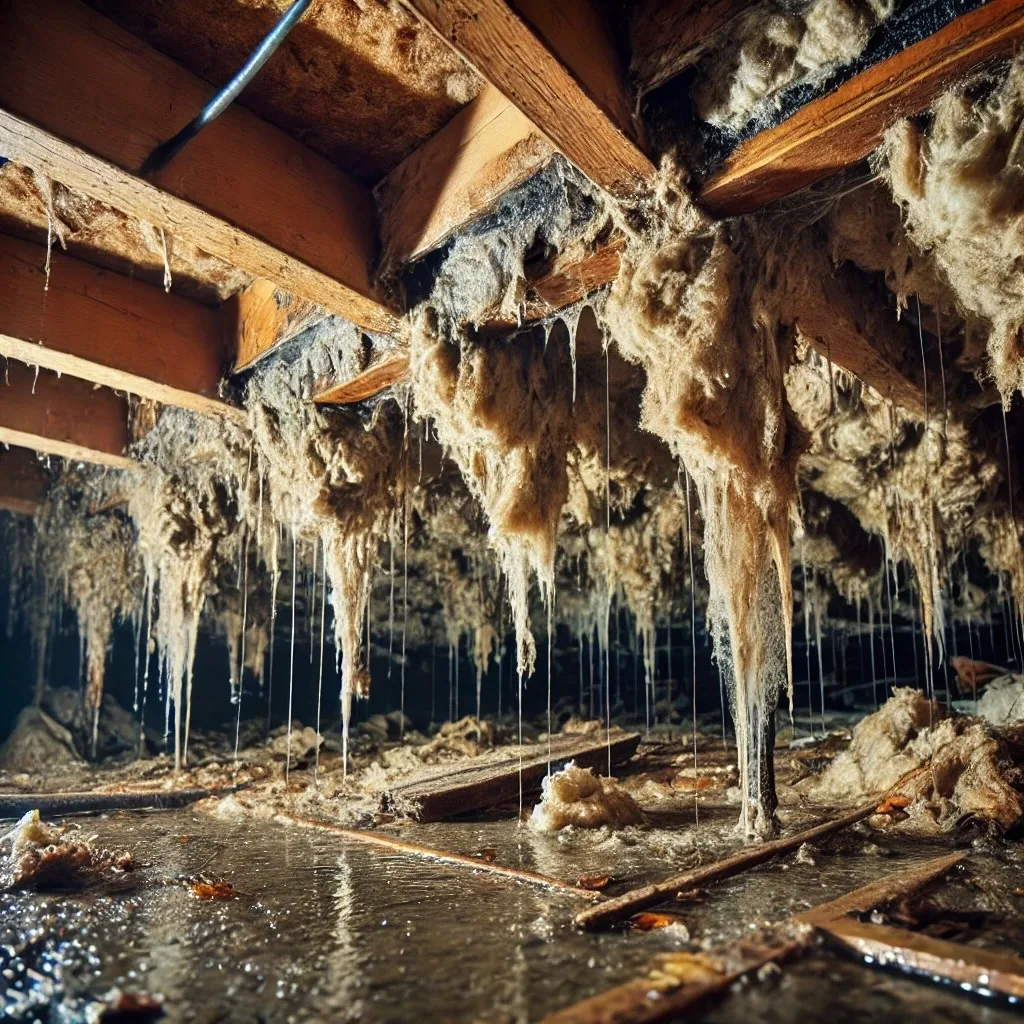
Four sources produce most crawl space odors: wood-decay fungi on framing, waterlogged fiberglass insulation, condensation on air ducts, and rodent or sewage contamination. The character of the smell narrows down which one you are dealing with.
| What it smells like | Usual source | What it means |
|---|---|---|
| Earthy, like a wet forest floor | Wood-decay fungi on joists, girders, or subfloor | Wood moisture has been high long enough for decay to establish |
| Sour, like laundry left in the machine | Fiberglass batts that absorbed moisture and sagged | Insulation is holding water against the subfloor and no longer insulating |
| Mildew, strongest at the supply registers | Condensation on cold flex duct in a humid crawl | The duct system is distributing the odor room to room |
| Sharp ammonia | Rodent urine in insulation or on the vapor barrier | An active or recent rodent population under the floor |
| Sewage | A failed drain line or wax ring above the crawl | A plumbing repair is needed before anything else |
Why is this so common in coastal Virginia?
Hampton Roads combines three conditions that individually cause crawl space moisture and together make it near-universal: a shallow water table, long stretches of high-dew-point marine air, and a housing stock built with open foundation vents.
- Shallow groundwater. Much of the region sits only a few feet above the water table. Low-lying areas near tidal water — the Lynnhaven River system in Virginia Beach, the Elizabeth River in Norfolk and Portsmouth, the Western Branch in Chesapeake — hold soil moisture that evaporates upward into the crawl year-round.
- Marine air with a high dew point. From roughly May through September, outdoor air here regularly carries a dew point in the 70s. When that air enters a crawl space cooled by air-conditioned floors above, it condenses on the first cold surface it meets: ductwork, plumbing, and the subfloor itself.
- Vented foundations. The residential code Virginia builds on requires under-floor ventilation openings — on the order of 1 square foot per 150 square feet of crawl area, reducible where a ground vapor retarder is installed. That approach assumes ventilation dries the space. In a humid coastal summer it often does the opposite, delivering moist air to a cool cavity.
- Housing age. Neighborhoods built through the 1960s–1980s — Kempsville and Bayside in Virginia Beach, Ghent in Norfolk, Deep Creek in Chesapeake — are dominated by pier-and-beam and shallow crawl construction, often with the original vapor barrier or none at all.
Which repair actually fixes the smell?
A musty crawl space is usually one moisture problem showing up in three systems at once. Fixing it in the wrong order means paying twice, because new insulation and clean ducts re-contaminate if the water source is still there.
Universal operates as three divisions precisely because this problem crosses all of them. The sequence that holds up:
- Stop the water and treat what grew. Grading, gutter discharge, and plumbing leaks first. Then the fungal growth on the framing is treated and any structural damage assessed — see wood fungus treatment and termite damage repair. Because moisture attracts subterranean termites for the same reason it feeds fungi, this step includes a crawl space inspection for active termite activity.
- Remove the insulation holding the water. Fiberglass that has absorbed moisture does not dry in place; it sags, holds water against the subfloor, and keeps the odor alive. Extraction and replacement is handled by Universal Insulation Doctor.
- Decontaminate the ducts that spread it. Flex duct that has been sweating in a damp crawl distributes the odor to every room on the circuit. Universal Duct Cleaning addresses that side.
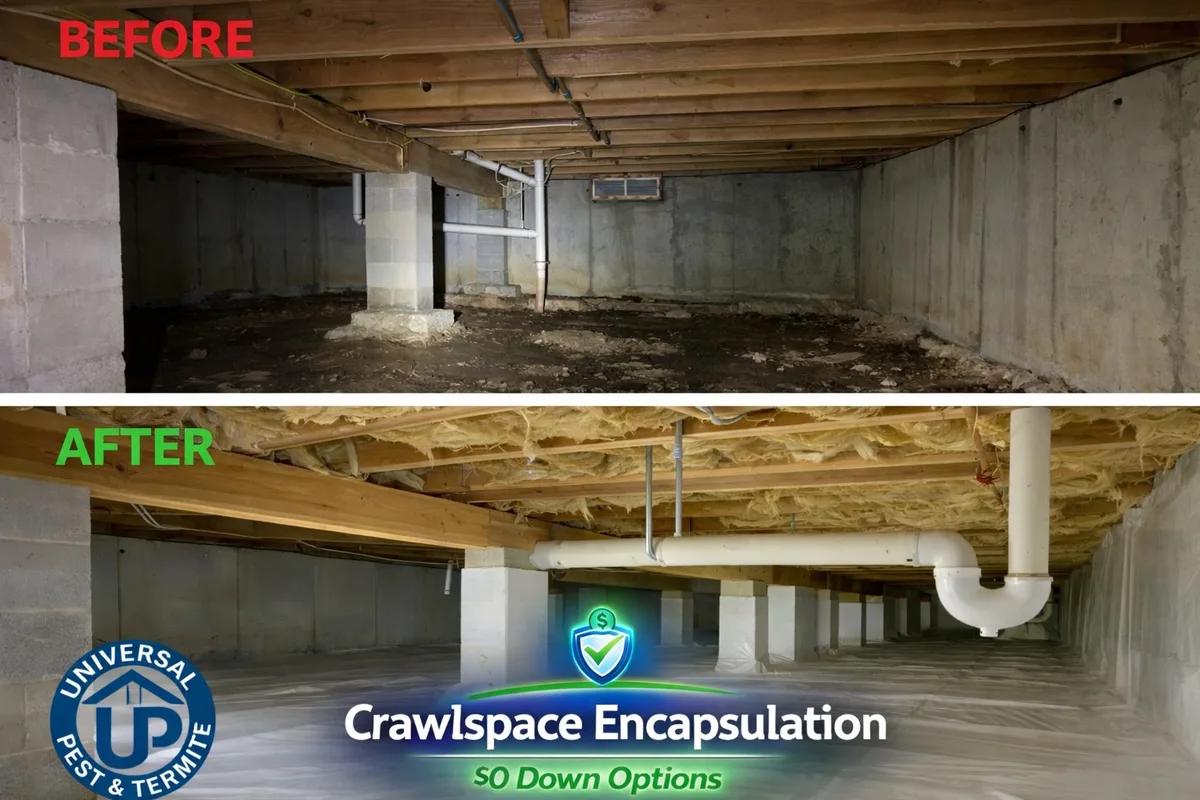
- Change the environment so it does not return. Depending on the house, that means a sealed vapor barrier and dehumidification, or full crawl space encapsulation. Encapsulating before steps 1–3 seals the problem in rather than out.
Frequently asked questions
Can I just put a dehumidifier down there?
A dehumidifier in an actively vented crawl space is working against an unlimited supply of outdoor humid air, and it will run continuously without reaching target. Dehumidification is effective once the space is sealed — it is a component of a closed crawl, not a substitute for one.
Is the musty smell dangerous?
The odor itself is a warning sign rather than the hazard. What matters is what it indicates: wood losing strength to decay, conditions that attract subterranean termites, and degraded air entering the living space. We do not perform mold testing or make health determinations — if indoor air quality is the concern, an industrial hygienist is the right professional.
Does homeowners insurance cover crawl space fungus?
Generally no. Most policies exclude damage from long-term moisture, humidity, and gradual deterioration, covering only sudden events such as a burst pipe. Check with your carrier before assuming either way.
How fast does the smell come back after treatment?
If the moisture source was corrected, it does not. If treatment was applied without changing the conditions, growth typically re-establishes within a season — which is why the order of operations above matters more than any single product.
Do you serve my area?
Universal Pest & Termite covers Virginia Beach, Chesapeake, Norfolk, Suffolk, Portsmouth, Hampton, Newport News, Williamsburg, Poquoson, and York County. Call (757) 502-0200 for a free inspection and quote.