Crush one and you will know it instantly — a sharp, coconut-and-rot smell that stays on your fingers. That odor is how odorous house ants earn their name, and it is why the trails you find on Landstown and Salem kitchen counters in spring are almost always this one species.
How do you know the ant on your counter is an odorous house ant?
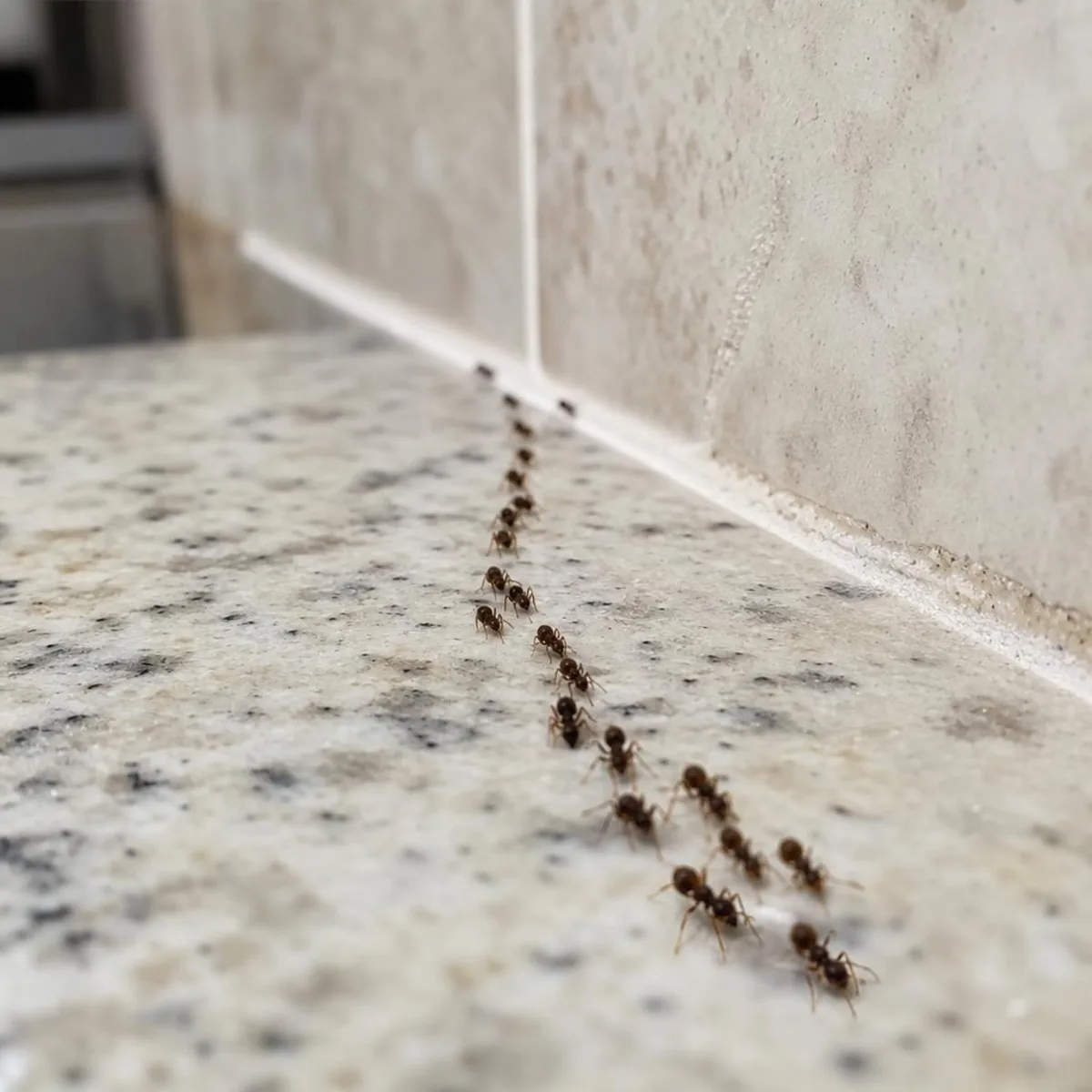
Squash it and smell. Odorous house ants give off a pungent, sour-sweet odor when crushed, which no other common kitchen ant here does. They are small and dark brown to black, move in steady single-file lines, and prefer sweets. The smell is the fastest confirmation before a single photo is even needed.
Size helps too. These ants are roughly an eighth of an inch, uniform in color, with an unevenly humped back you would need a hand lens to appreciate. What you notice without one is behavior: a persistent line running from a wall gap to a spill, a pet bowl, or a leaking cabinet trap. If you want a side-by-side against carpenter ants and pavement ants, our pest library keeps photos worth comparing before you assume the worst.
The mistake we see most in Landstown is treating any small dark ant as a threat to the house frame. Odorous house ants do not excavate wood — they are a nuisance and a food-safety annoyance, not a structural one, which changes how you should respond.
Why do these ants set up in kitchens and bathrooms specifically?
They follow moisture and sugar. Kitchens offer both — condensation behind the sink, film on the counter, crumbs in the toaster tray. Bathrooms offer the water half: a sweating supply line or a shower gap. Odorous house ants nest wherever those two things sit close together, often inside a wall void next to plumbing.
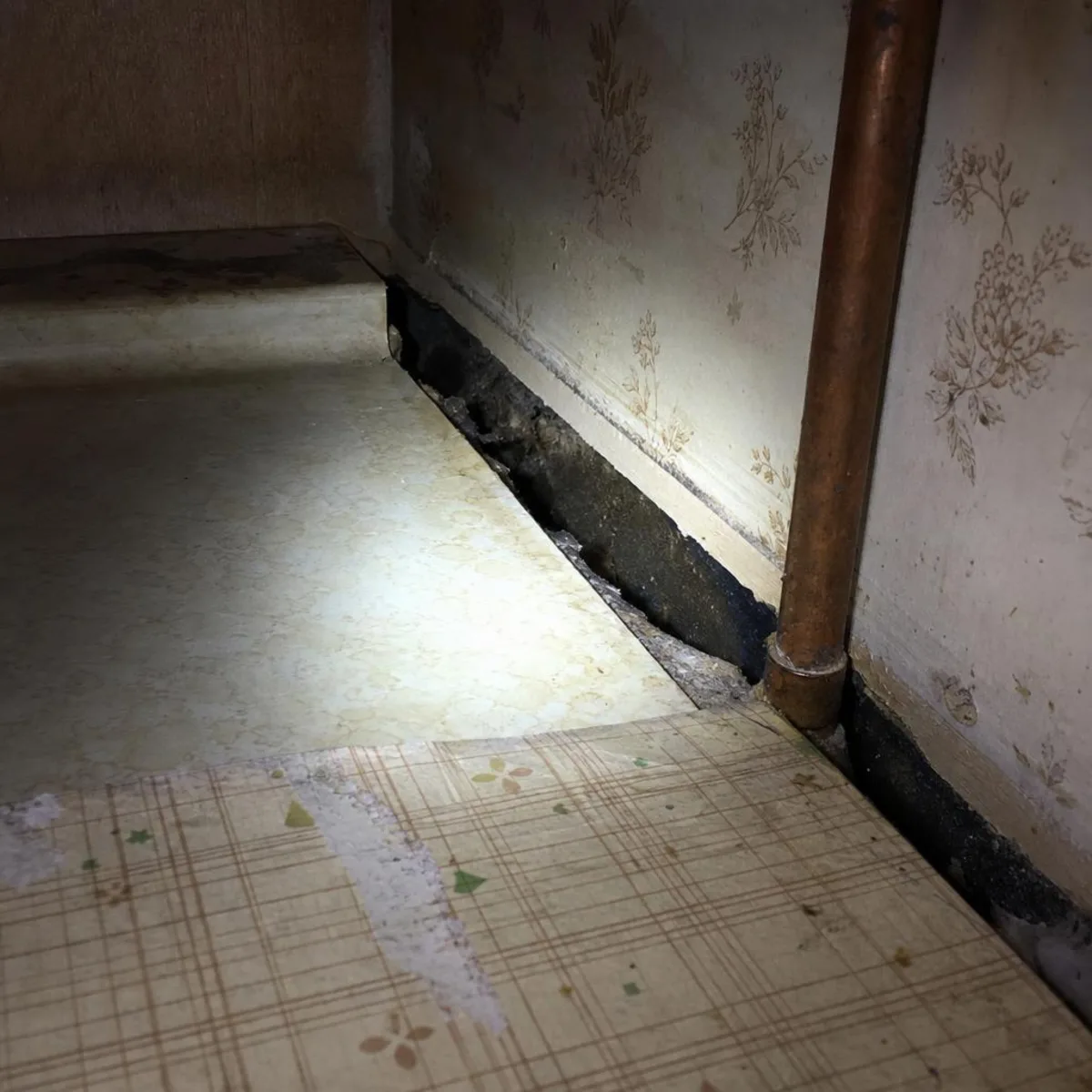
In the newer Salem and Landstown subdivisions, most homes are slab-on-grade, so there is no crawl space for a colony to hide under. Instead these ants exploit the seam where the slab meets the sill, wall penetrations for plumbing, and the gap under the dishwasher. The colony may sit outside in mulch or under a slab section, and only the foraging trail comes indoors.
Spring is the trigger. As the ground warms and the first heavy rains push through, established colonies split and forage aggressively, and the shortest path to reliable food is your counter. It is a seasonal surge, not a sign the house is failing. Our ant control service is built around that seasonal timing rather than a single spray-and-forget visit.
Why does bait work on these ants when spray makes them worse?
Odorous house ants live in colonies with many queens across several connected nests. A contact spray kills the foragers you see and alarms the rest, which respond by budding — splitting into new satellite colonies. Bait does the opposite: workers carry it home and feed the queens, so the whole network collapses instead of scattering.
This is the single most important thing to understand about the species. Reaching for a can under the sink feels satisfying because the line vanishes, but within days you often see two or three thinner trails where there was one. That is budding, and store spray is a common cause of it.
Effective treatment means placing the right bait on the active trail and leaving it undisturbed while the ants carry it back. We pair that with sealing the entry seams so the next colony has a harder time getting a foothold, which overlaps with our pest exclusion work.
How does the drainage in this flatter part of the city drive the problem?
Landstown and Salem sit on some of the flatter, newer ground in Virginia Beach, where the water table is high and stormwater moves slowly through engineered ditches rather than draining fast. Wet mulch beds and saturated soil against a slab give these ants exactly the damp nesting conditions they want, right up against the foundation.
After a spring downpour, water sheets across flat lots and lingers in the ditch network before it clears. Beds that stay soggy, downspouts that dump against the slab, and irrigation run too often all keep the soil at the foundation damp for days. Odorous house ants nest in that band and forage inward from it.
Grading the mulch down off the slab, moving downspout discharge away from the wall, and letting beds dry between waterings removes the conditions that keep colonies pressed against the house. Our Salem route and the neighboring Princess Anne corridor share this flat, slow-draining ground, so the same foundation-perimeter approach applies across both.
| The trail or sign on your counter | The Landstown or Salem condition behind it | The move that ends it |
|---|---|---|
| A single-file trail across the counter to the sink | Condensation and food film in a slab home give foragers moisture and sugar in one spot | Bait the active line, then clear the moisture source rather than spraying the trail |
| Two or three new trails after you sprayed one | Contact spray alarmed a multi-queen colony and triggered budding into satellite nests | Stop spraying, switch to slow-acting bait workers carry back to the queens |
| Ants at the bathroom baseboard, not just the kitchen | They follow a sweating supply line or shower gap for the water half of what they need | Seal plumbing penetrations and dry the void behind the fixture |
| Activity spikes right after a spring rain | Flat lots and slow ditch drainage keep foundation soil saturated for days | Redirect downspouts and grade mulch beds down off the slab edge |
| Trails emerging from the slab-to-sill seam | Newer slab-on-grade construction has no crawl space, so ants use the perimeter joint | Caulk the sill seam and treat the exterior band where the colony forages |
Frequently asked questions
Do odorous house ants damage the wood in my home?
No. Unlike carpenter ants, this species does not excavate or tunnel through wood, and it does not eat it. The concern is contamination and nuisance — ants tracking across food surfaces and getting into open packages. Structurally your home is fine. What you want to protect is the kitchen and the sense that the counters are clean.
Why do they keep coming back to the same spot on the counter?
Ants lay a chemical trail that other workers follow, so once a line is established it reinforces itself as long as the reward is there. Wiping the surface with plain water spreads the scent rather than removing it. Cleaning with soap or a vinegar solution breaks the trail, and removing the food or moisture at the end of it stops the line from rebuilding.
Are the winged ants I found the same species?
Often yes. In spring, mature colonies produce winged reproductives that emerge to start new nests, and finding a few indoors usually means a colony is nearby rather than inside a wall stud. Winged termite swarmers look similar at a glance but have straight antennae and equal-length wings, so identification matters before you decide which problem you have.
Will one bait treatment end the whole colony?
Sometimes, but multi-queen colonies with satellite nests can take repeated feeding to collapse fully, especially in spring when they are budding. The bait has to reach every queen through the worker network, which takes time and an undisturbed trail. Follow-up placement is normal, and it is a slower, quieter process than a spray that clears the visible line in an hour.
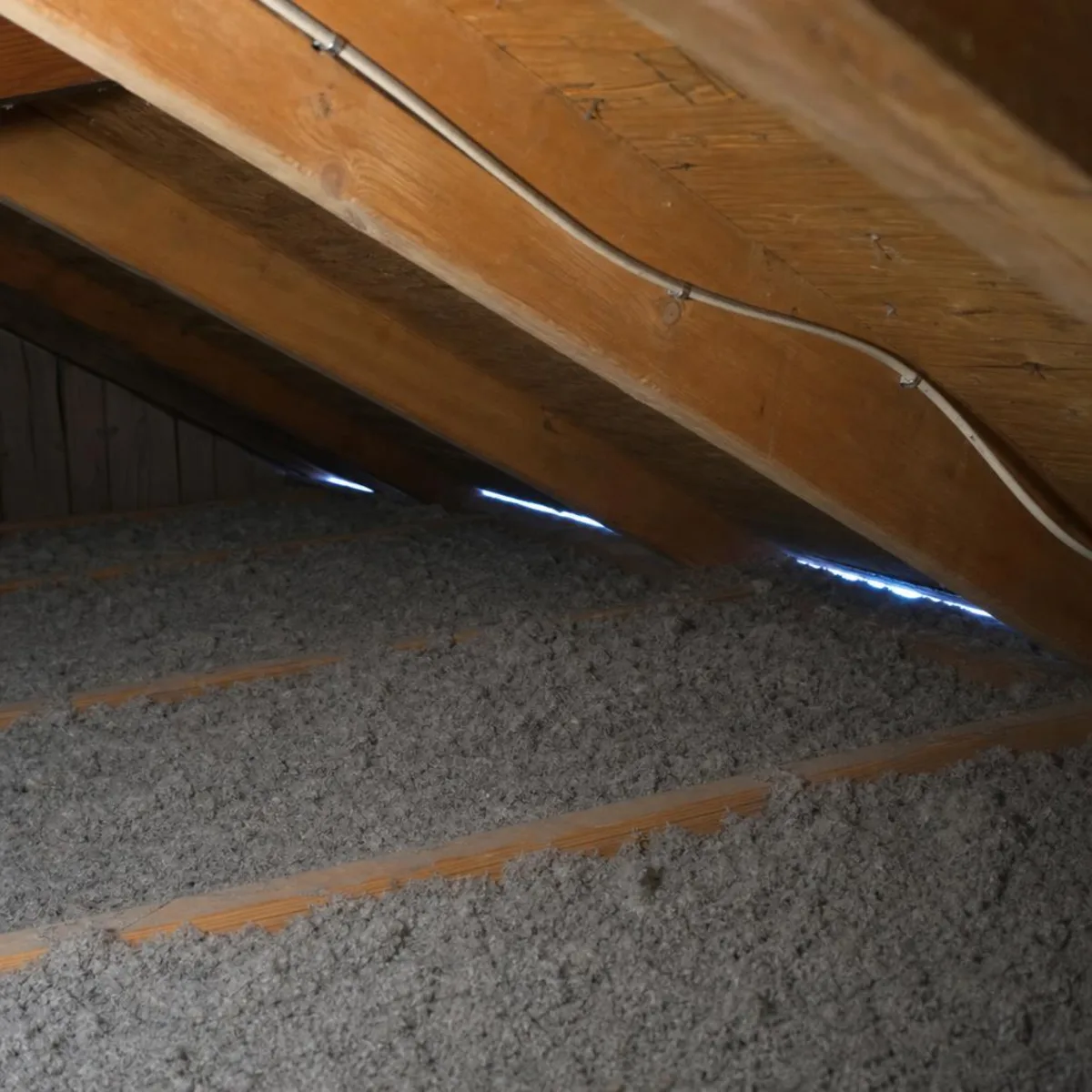
When a spring trail keeps rebuilding on the same stretch of Landstown or Salem counter, the answer is a bait-first plan that reaches the queens and a sealed slab-to-sill seam, not another can of spray that scatters the colony. If foraging ants have been running a wall void near a sweating supply line, damp insulation in that cavity often comes along with the problem, and Universal Insulation Doctor is who we bring in to dry and replace it; where ants and their debris have found the return-air path, Universal Duct Cleaning handles that side. Tell us where the line emerges and we will trace it to the nest — grab a free quote to get on the schedule.