Updated: July 22, 2026
A trail of tiny black figures marching across your pristine kitchen counter – it’s a scene that can send a shiver down any homeowner’s spine. Here in Virginia Beach, our local ant populations thrive in the warm, humid summers. They can quickly become more than just a minor annoyance; certain species can actually cause structural damage to your home.
If you are dealing with persistent ants, you’ve likely tried superficial “spray and pray” methods, only for the colony to return with a vengeance. That is because modern ant control requires more than just reactive chemical spraying. It demands an integrated, strategic approach.
Let’s break down the essential steps to eliminate an ant infestation from your Virginia Beach home for good.
A Strategic, Step-by-Step Approach to Effective Ant Control
1. Identify Your Invader
The first and most crucial step is to know your enemy. In the Virginia Beach region, several distinct ant species can invade. Treatment strategies differ significantly depending on the type of ant:
-
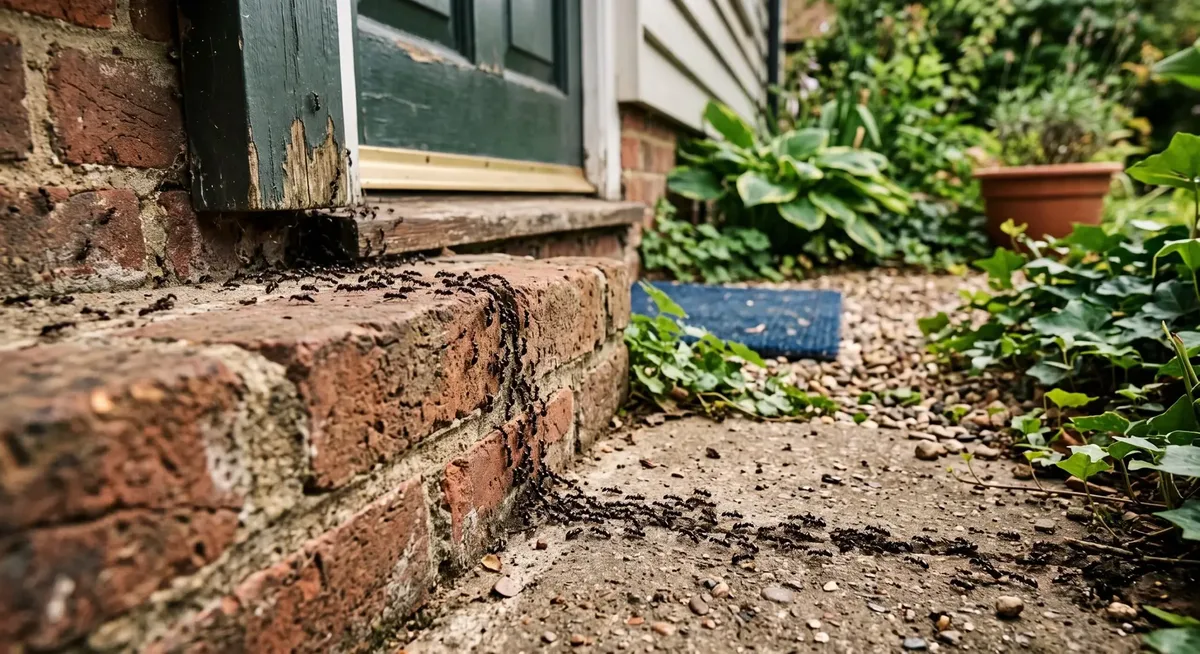
Pavement Ants, often found near sidewalks or foundations.
-
Odorous House Ants, known for the “rotten coconut” smell they emit when crushed.
-
Carpenter Ants, which tunnel into wood, potentially causing serious structural issues.
Pro-tip: If you are unsure, try to take a clear, close-up photo of an ant trail. A professional can quickly identify the species.
2. Dislodge Satellite Colonies with Colony Elimination Tools
The key to successful ant control is eliminating the queen and disrupting the complex hierarchy of the colony. Traditional sprays only kill the worker ants that cross your path, leaving the core of the infestation (the queen) untouched.
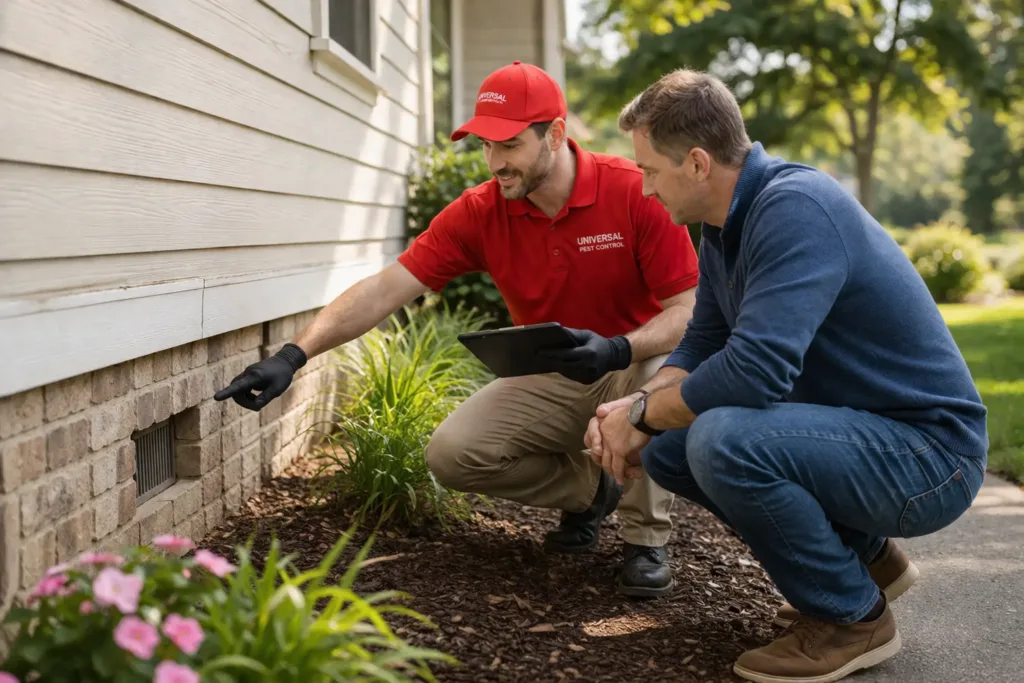
Modern techniques utilize slow-acting, low-toxicity professional ant baits. These “Trojan horse” products are designed to be irresistible. The workers take the bait, which is then distributed throughout the nest, including to the queen and larvae.This is the only reliable way to crash the colony from the inside out. When you see a pest control professional carefully treating specific areas (like the mulched bed seen in the image), this is often the target of their work.
3. Apply a Long-Lasting Barrier Around Your Home
Once the interior infestation is neutralized, the best defense is a strong, persistent offense. Creating a long-lasting barrier around the entire foundation of your Virginia Beach home is crucial. This invisible perimeter deters new ant trails from even attempting to enter, especially during high-moisture periods. Granular or residual liquid treatments are applied by professionals to provide ongoing protection against re-invasion.
5 Frequently Asked Questions About Ant Control in Virginia Beach
Q1: I see ants again just a few days after I spray. Why won’t they die?
A: This is the most common frustration. When you use a consumer-grade spray, you are only killing the “scout” ants. The rest of the colony is still safely in the nest. In fact, aggressive chemical sprays can sometimes trigger a defense mechanism called “budding,” where the colony actually splits and creates multiple satellite colonies, making the problem worse.Modern colony elimination strategies target the queen first.
Q2: What are the main signs I might have Carpenter Ants?
A: Carpenter ants don’t actually eat wood; they hollow it out to create nesting space. Warning signs include:
-
Piles of fine sawdust (called frass) beneath wooden structures.
-
“Winged ants” (known as swarmers) appearing inside during spring.
-
Rustling or tapping sounds coming from within wall voids or structural beams.
Q3: Are professional ant treatments safe for my pets?
A: Yes, when applied correctly. At Universal Pest & Termite, we utilize baits and treatment methods with very low toxicity ratings. Furthermore, advanced placement techniques ensure treatments are applied only where they are needed—in cracks, crevices, or targeted areas—and are generally inaccessible to family pets.
Q4: How long do I need to wait to see results?
A: This is the hard part: patience is key. Colony elimination using slow-acting baits takes time. Because the poison must be distributed from ant to ant, you will typically see a decrease in activity within 2–4 days, but complete elimination of a large, complex colony can take 10–14 days. This is a temporary trade-off for a permanent solution.
Q5: If I keep my kitchen spotless, will that keep ants away?
A: Keeping a clean home (sealing food, cleaning crumbs) is an excellent first defense. However, ants are incredibly industrious. They will forage for moisture, shelter, or different proteins. Once a scout ant has found an entry point—often through tiny cracks around windows or plumbing—the colony will follow. Cleanliness makes your home less attractive,but it won’t repel determined invaders.